

We live in an era dominated by chronic overthinking, everyday stress, and an undercurrent of existential anxiety. While modern psychology offers brilliant tools to manage these feelings, ancient spiritual traditions looked directly at the root cause. They aimed at the deep layers of the subconscious mind where pain and trauma reside.
If you are looking for a reliable way to stabilize your nervous system, learning how to use meditation to overcome fear might be the precise solution you need.
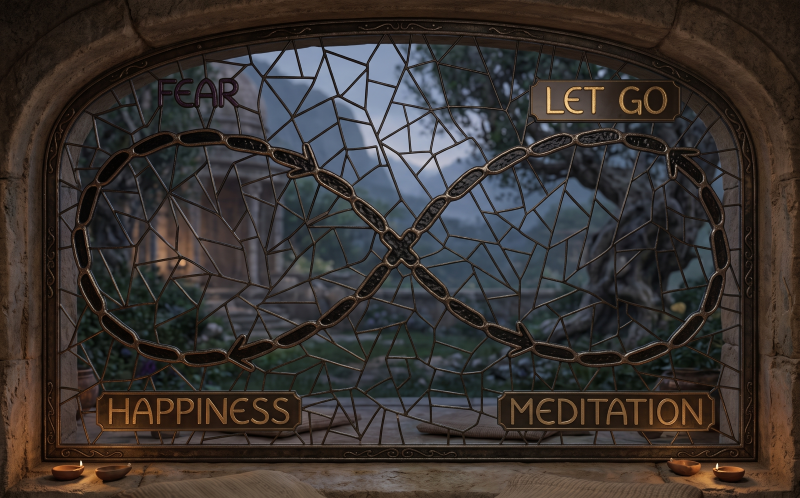
Many people try basic mindfulness only to find their minds racing faster. This happens because the conscious mind is trying to fight deep, somatic anxiety. To bypass this barrier, ancient Eastern traditions utilized sound therapy—specifically chanting. By examining the spiritual blueprint of a famous 13th-century verse written by Indian saint Sri Dnyaneshwar Maharaj (Om Namoji Adya), we can discover a practical framework to shift our brainwaves and dissolve deep-seated anxiety.
Why Standard Mindfulness Sometimes Fails for Anxiety
When you sit down to quiet your mind during a high-stress season, your brain often interprets the sudden silence as a threat. The analytical left hemisphere begins to catalog your worries, making you feel more restless than when you started.
To successfully learn how to use meditation to overcome fear, you need an active tool to engage the brain’s focus. This is where vocal resonance becomes a physiological game-changer.
Vocal chanting acts as a natural anchor. It gives the racing intellect a rhythmic task while simultaneously sending safety signals to your physical body. Instead of forcing yourself to “think about nothing,” you fill your awareness with structural sound vibrations that gently ease your nervous system out of a defensive state.
The Ancient Sonic Blueprint: Deconstructing the Mantra
In an insightful video layout by Saarathiw Beyond Mind, the speaker highlights a sacred verse from the Dnyaneshwari (the historic commentary on the Bhagavad Gita).
You can watch the full breakdown and practice along with the video here
The verse reads: “Om Namoji Adya, Veda Pratipada, Jaya Jaya Swasamvedya, Atmarupa.”
Understanding the specific mechanics of these words reveals how they help you cultivate a fear-free mindset:
- Om: The fundamental vibration of the universe. Rhythmic vocalization of this sound naturally creates a nasal resonance that stimulates the surrounding facial nerves.
- Namo: An act of absolute surrender and openness. It signals your ego to step down, lowering mental barriers.
- Adya: Refers to the primordial source—the unchanging background of all creation.
- Veda Pratipada: Represents pure consciousness, the space from which all knowledge arises.
- Swasamvedya: The core secret of how to use meditation to overcome fear. It means “that which knows itself by itself.” It points to your soul (Atman) as an independent, self-illuminating entity that remains completely untouched by external chaos.

A Step-by-Step Guide: How to Use Meditation to Overcome Fear
To experience the full cognitive and emotional benefits of this ancient practice, your meditation requires a clean structure. Follow this daily sequence to maximize your results:
- Find a Stable Posture: Environment Prep.
Choose a quiet space where you will not be disturbed. Sit comfortably with your spine tall and erect to ensure unhindered diaphragmatic breathing.
- Regulate Your Nervous System: 2-3 Minutes.
Close your eyes and breathe slowly through your nose. Inhale for four counts, hold briefly, and exhale for six counts to trigger your body’s relaxation response.
- Engage in Resonant Chanting: 5-11 Minutes.
Vocalize the verse smoothly: Om Namoji Adya, Veda Pratipada, Jaya Jaya Swasamvedya, Atmarupa. Feel the physical vibration in your throat and chest.
- Rest in Silent Awareness: 3-5 Minutes.
Stop chanting aloud. Sit in absolute stillness, observing the residual quiet. Identify with the calm observer inside you rather than your passing thoughts.
The Biological Science Behind Chanting
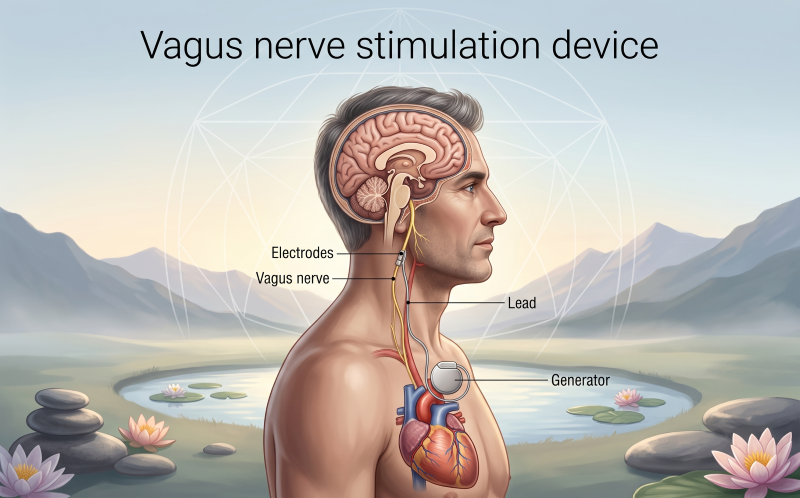
It is easy to categorize chanting as simple mysticism, but modern neuroscience heavily validates its design. Rhythmic, slow vocalizations directly stimulate the vagus nerve, which runs from the brainstem down to the abdomen.
Stimulating this nerve sends an instant chemical message to your heart and lungs to lower your heart rate and decrease blood pressure. Furthermore, neuroimaging studies show that repetitive sound meditation helps deactivate the amygdala—the brain’s emotional alarm system. When you lower your body’s survival responses, your brain naturally stops producing the looping thoughts that fuel anxiety.
People Also Ask: FAQ
Yes. The physiological benefits of sound meditation rely primarily on the physical resonance of the vowels and the rhythm of your breath. While knowing the meaning deepens your psychological focus, the biological benefits happen naturally through the act of chanting.
Many practitioners notice an immediate drop in acute stress right after a single session. However, to truly train your mind how to use meditation to overcome fear on a permanent basis, you should commit to a daily practice for at least two weeks to build new neural pathways.
Early morning is ideal because your mind is naturally quiet before the day’s tasks begin. However, practicing right before bed is also highly effective if you struggle with racing thoughts or nighttime anxiety.
Cultivating Lasting Inner Resilience
Ultimately, chronic fear relies on a single illusion: the feeling that you are fragile, isolated, and constantly under threat. By anchoring your awareness to an unchanging, self-aware source (Swasamvedya), you shift your perspective. You realize that you are the steady sky, and your anxious thoughts are simply passing weather.
Try incorporating this ancient approach into your routine this week. Do not view it as a strict chore, but rather as a daily opportunity to hit the reset button on your mind. You will likely find that the deep peace you cultivate during these few minutes begins to protect you throughout the rest of your day.